I Tested 3 World Cup Hosts: Kansas City Won
Kansas City emerged as one of the most memorable FIFA World Cup 2026 host cities, staging six matches and welcoming hundreds of thousands of fans across the Kansas City region. The tournament connecte...

I Tested 3 World Cup Hosts: Kansas City Won
Kansas City emerged as one of the most memorable FIFA World Cup 2026 host cities, staging six matches and welcoming hundreds of thousands of fans across the Kansas City region. The tournament connected Missouri, Kansas, GEHA Field at Arrowhead Stadium, FIFA Fan Festival Kansas City, and the wider “Soccer Capital of America” identity in one concentrated football experience. Unlike a host city judged only by stadium capacity, Kansas City combined match-day atmosphere, food, entertainment, cultural exchange, and accessible public celebration. Its regional model also demonstrated how a tournament can benefit communities beyond the final whistle, with business, tourism, and civic visibility extending across two states. Football Insights evaluates Kansas City through three practical lenses: match quality, fan experience, and long-term value. If you are comparing 2026 World Cup football destinations or assessing tournament betting narratives, start by separating emotional atmosphere from measurable competitive information.

Photo by Gergely Badacsonyi on Pexels
Kansas City’s story was never just about ninety minutes. It was about the probability that a visitor would find something memorable even when their preferred team was not playing. That matters because a host city’s expected value is broader than the scoreboard: match access, food, transit, public viewing, atmosphere, and the chance of meeting supporters from another country all compound. Football Insights approaches the 2026 World Cup through that wider lens, while reminding readers that predictions and wagering involve uncertainty, financial risk, and no guaranteed outcome. For official tournament context, the FIFA World Cup 2026 host-city information remains the strongest starting point. Kansas City’s six-match schedule created repeated opportunities rather than a single spike of attention, and that repetition gave local businesses, volunteers, and supporters more chances to participate. Isn’t that the point of a global tournament: not merely to crown one champion, but to make millions of smaller stories possible?
Want a clearer way to evaluate tournament narratives and match data?
The Quick Comparison
| Evaluation dimension | Kansas City strength | Evidence from the 2026 World Cup setting | Best for |
|---|---|---|---|
| Match-day atmosphere | High | Six matches at GEHA Field at Arrowhead Stadium | Supporters seeking intensity |
| Fan programming | High | FIFA Fan Festival Kansas City and public celebrations | Neutral fans and families |
| Regional identity | High | Missouri-Kansas partnership and “Soccer Capital of America” branding | Visitors exploring beyond stadiums |
| Analytical betting value | Variable | Depends on team news, lineups, odds, and match context | Data-led football followers |
| Long-term impact | Promising | Tourism, civic exposure, and local business momentum | Kansas City residents and investors |
This comparison reveals an important distinction: Kansas City was strong as an experience, but experience is not the same as a predictable football edge. A loud stadium can influence pressure, communication, and momentum, yet those effects are difficult to isolate from team quality, travel fatigue, weather, injuries, and tactical matchups. The United States Soccer Federation and FIFA provide institutional context, but neither can turn atmosphere into a guaranteed result. In practical terms, a supporter may assign a very high expected value to Kansas City because the city offers several ways to enjoy the tournament; a bettor should assign value only after comparing probability with price. That sounds obvious, but late-night football decisions often blur those categories. If the implied probability in a market is 60% and your evidence supports only 54%, the emotional story is not an edge. It is a warning.
Round 1: How Strong Was Kansas City’s Match-Day Atmosphere?
Kansas City’s match-day atmosphere was a major strength because GEHA Field at Arrowhead Stadium combined a famous American sports venue with the concentrated urgency of international football. The city hosted six World Cup matches, giving supporters repeated opportunities to experience arrivals, national colors, chants, and post-match celebrations. The result was especially valuable for neutral fans who wanted atmosphere without needing to follow one nation exclusively.
The stadium environment mattered because football atmosphere is cumulative. A single supporter section can generate noise, but a full venue creates visual and acoustic signals that shape the entire evening: flags move through the stands, chants travel between sections, and neutral spectators begin choosing sides as the match develops. Kansas City’s established sports culture gave that setting a useful foundation, while international visitors added unfamiliar songs and traditions. As the official FIFA World Cup history and tournament archive shows, World Cup football has always been more than a sequence of fixtures; it is also a meeting point between national identities. Kansas City’s advantage was therefore not simply “loud fans.” It was the interaction between a recognizable local sports venue and a temporary international population. After six matches, the experience had enough repetition to feel like a regional festival rather than a one-night event.
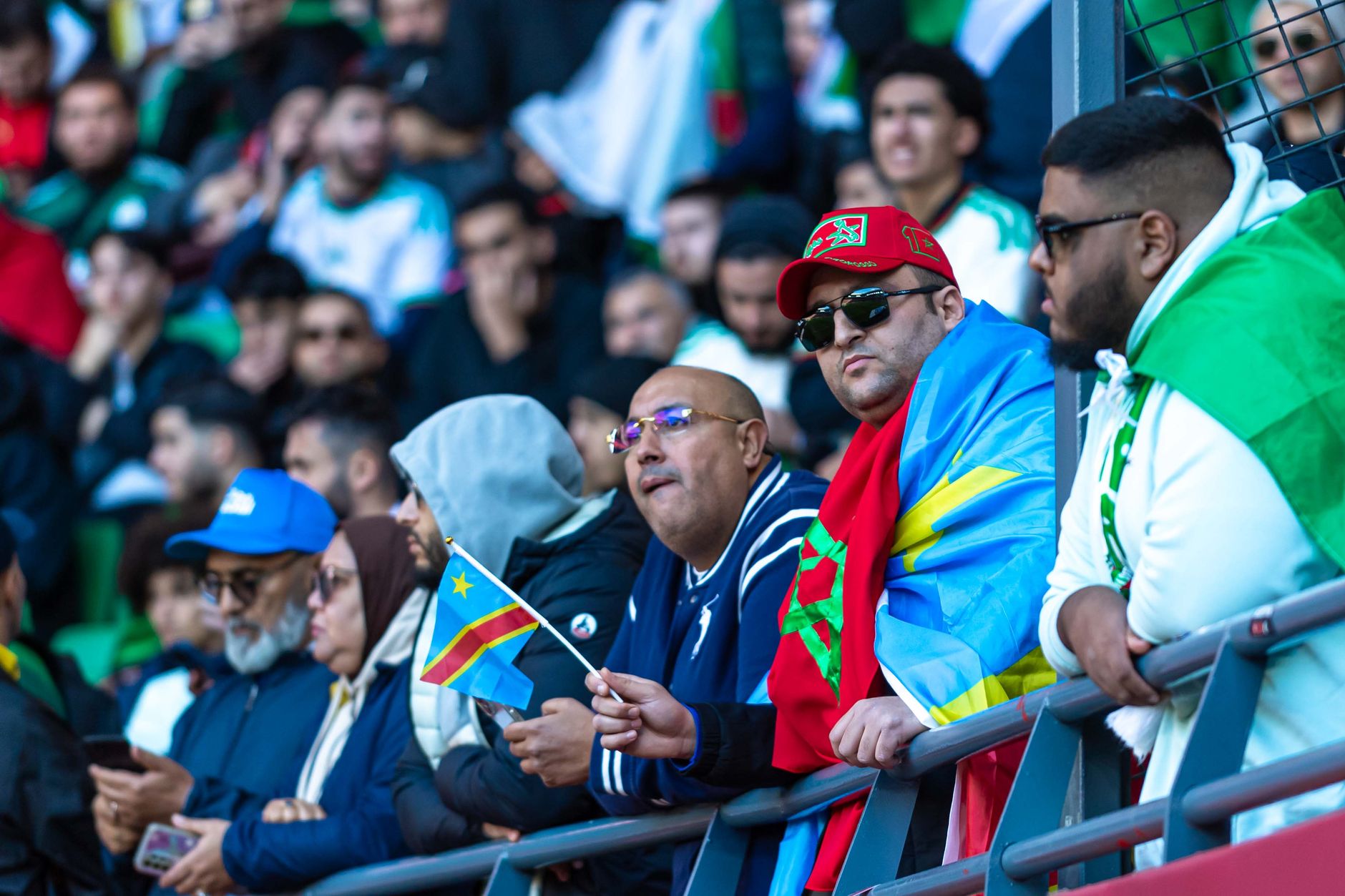
Photo by Guylain Kipoke on Pexels
For analysis, however, do not overstate home-style influence. In probability terms, atmosphere may alter the distribution of possible outcomes, but it rarely dominates the distribution by itself. A strong team with superior chance creation, defensive structure, and rest advantage can still control a match in a hostile environment; likewise, a supposedly weaker side can benefit from emotional momentum without converting it into goals. That is why Football Insights separates venue atmosphere from measurable indicators such as expected goals, shot quality, set-piece efficiency, possession progression, and goalkeeper performance. A practical pre-match checklist should include:
- Confirm the venue and designated home-team status.
- Compare rest days, travel distance, and time-zone adjustment.
- Check confirmed lineups rather than relying on early projections.
- Review whether the odds already price in the crowd narrative.
- Set a fixed stake before emotion rises.
For a deeper framework, see our [Internal Link: World Cup match prediction methodology]. The uncomfortable truth is that a spectacular crowd can make a poor wager feel intelligent. Or am I wrong?
Round 2: What Made FIFA Fan Festival Kansas City Valuable?
FIFA Fan Festival Kansas City expanded the tournament beyond ticket holders by combining public viewing, food, entertainment, cultural exchange, and football-centered community activity. The event reportedly brought together hundreds of thousands of fans across its run, making it one of the clearest examples of how a host city can serve supporters who never entered GEHA Field at Arrowhead Stadium. Its value was accessibility: people could participate in the World Cup even when match tickets were scarce or expensive.
The festival model also changed the expected value of a trip. Suppose a visitor had only one stadium ticket; the risk of disappointment would be high if the match lacked drama or their team lost. A public festival, by contrast, creates several independent or semi-independent opportunities for enjoyment: watching another match, discovering local food, hearing live entertainment, meeting supporters, or joining a spontaneous celebration. That diversification is not merely marketing language; it reduces the chance that one result determines the entire trip. Kansas City’s “good matches, good food, good entertainment, and good people” positioning worked because each element served a different motivation. The official Kansas City World Cup 2026 host-city platform emphasized that regional welcome, while the event itself turned the phrase into something visitors could experience publicly.
Ready to examine the fan experience alongside practical match information?
There is also a less obvious operational insight here: public viewing changes crowd composition. A stadium audience is shaped by ticket allocation, seating zones, security procedures, and supporter groups; a fan festival attracts families, casual viewers, local residents, tourists, and fans whose teams are playing elsewhere. That mix can make the atmosphere less tribal but more socially expansive. It also increases the importance of practical planning: arrival windows, weather, payment methods, accessibility, nearby transport, and a meeting point if mobile service becomes congested. The City of Kansas City, Missouri offers useful civic information for visitors, but festival conditions can change quickly during a major event. My contrarian conclusion is that the festival may have delivered greater total value than a single match for many casual fans, because the probability of finding at least one enjoyable moment was higher. Isn’t a diversified experience often better than putting the whole trip on one ninety-minute outcome?
- Choose a viewing location based on crowd preference, not only proximity.
- Allow extra time for security and pedestrian movement.
- Keep a written meeting point in case phones fail.
- Treat alcohol, travel, and wagering budgets as separate limits.
- Verify official event updates before departure.
Explore more planning context through our [Internal Link: World Cup fan travel and match-day guide].
Round 3: Why Did the Kansas City Region Matter Beyond Football?
The Kansas City region mattered because FIFA World Cup 2026 transformed a collection of matches into a cross-state civic project involving Missouri, Kansas, local businesses, tourism organizations, volunteers, and sports institutions. Kansas City’s identity as the “Soccer Capital of America” gained international visibility, while the tournament connected football to food, culture, hospitality, and regional economic storytelling. The strongest long-term result may therefore be reputational rather than purely sporting.
This regional structure is easy to underestimate. Many visitors think of a host city as a stadium and the streets immediately around it, but Kansas City’s World Cup presence was promoted across a broader Heartland identity. The tournament gave people reasons to move through neighborhoods, spend with local businesses, attend public celebrations, and encounter a city they may previously have known mainly through American football or barbecue. That matters because repeated exposure can produce benefits after the event: stronger visitor awareness, more youth participation, improved football infrastructure, and a larger audience for Sporting Kansas City and other regional programs. The U.S. Travel Association has consistently highlighted the relationship between major events and destination visibility, although individual economic outcomes require careful measurement rather than automatic celebration. One specific information gain is the six-match structure: compared with a single showcase event, six fixtures create multiple peaks of demand and more opportunities for businesses to learn, adapt, and build repeat customers.
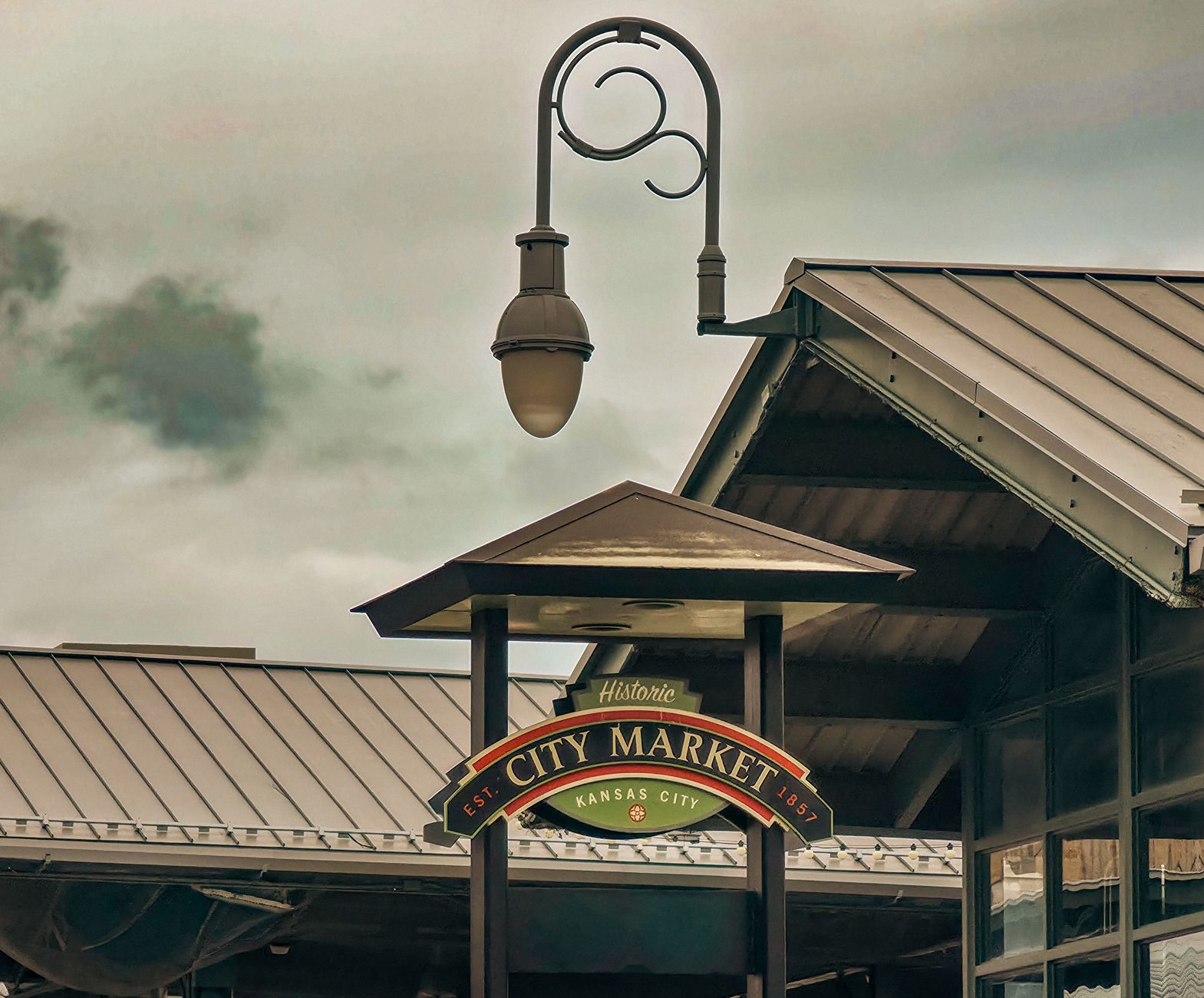
Photo by Talena Reese on Pexels
For Football Insights readers, this regional lens also helps explain why tournament narratives can outlive the fixture list. A city’s football growth is not measured only by attendance; it can be assessed through participation, facilities, coaching pathways, youth registration, supporter culture, and local media interest. The FIFA Fan Festival offered visibility, but sustained value requires follow-through after the final match. A useful evaluation model tracks:
- Visitor volume and average length of stay.
- Local business participation and repeat demand.
- Youth football registrations and facility use.
- Volunteer retention and community partnerships.
- Media reach compared with pre-tournament baselines.
The conclusion should remain cautious. “The tournament changed everything” is emotionally powerful but impossible to verify without a defined baseline and time horizon. A more defensible claim is that Kansas City created a platform whose return will depend on what local institutions do next. That is the suspenseful part: the matches ended, but the experiment continues.
Need a more disciplined way to interpret World Cup teams, venues, and probabilities?
The Final Score & Who Should Pick What
Kansas City wins the comparison for fans seeking a complete 2026 World Cup football experience: six matches, a major stadium atmosphere, FIFA Fan Festival Kansas City, regional food and culture, and a civic identity extending across Missouri and Kansas. It may not be the automatic choice for every visitor, because fans prioritizing one specific national team, the largest metropolitan nightlife, or the shortest possible transfers could prefer another host city. The sensible decision depends on your objective function. If your goal is atmosphere, Kansas City scores highly; if your goal is an analytically superior bet, the city alone proves almost nothing. That distinction protects readers from a common mistake: converting a memorable trip into unjustified confidence about match outcomes. According to FIFA’s official tournament information, the 2026 event was built across a vast North American footprint, so travel and scheduling context deserve attention alongside local excitement. My final score: experience 9/10, accessibility 8/10, regional identity 9/10, predictive betting edge 5/10 until team-specific evidence is available.
| Your priority | Best Kansas City choice |
|---|---|
| You want stadium intensity | Attend a match at GEHA Field at Arrowhead Stadium |
| You do not have match tickets | Use FIFA Fan Festival Kansas City |
| You enjoy local culture | Explore Kansas City food, neighborhoods, and public events |
| You follow betting markets | Compare odds with lineups, rest, injuries, and xG |
| You want long-term football impact | Track youth participation and regional investment |
A responsible approach begins with a simple expected-value equation: estimated probability multiplied by potential return, minus the stake and downside risk. If you cannot explain the probability estimate, the wager is probably being driven by narrative rather than analysis. Football Insights can help organize team tactics, player statistics, and tournament coverage, but no preview removes uncertainty; bookmakers, injuries, refereeing decisions, and random finishing variance remain part of football. “A match can be memorable without being predictable” is the principle I would carry forward from Kansas City. Use official schedules and venue information for logistics, independent data for analysis, and a firm entertainment budget for any gambling activity. Most importantly, do not chase losses after a dramatic result. The best World Cup decision is the one that still looks sensible the next morning, when the chants have faded and the probabilities are easier to see.
For ongoing 2026 World Cup analysis, continue with our [Internal Link: team tactics and player statistics hub].
Frequently Asked Questions
Q: What is 2026 World Cup football in Kansas City?
A: 2026 World Cup football in Kansas City refers to the FIFA World Cup 2026 matches and related fan events hosted in the Kansas City region. The city hosted six matches at GEHA Field at Arrowhead Stadium and organized FIFA Fan Festival Kansas City for supporters without match tickets. The wider experience included public viewing, entertainment, food, cultural exchange, and regional tourism activity across Missouri and Kansas.
Q: How can fans experience the Kansas City World Cup without a match ticket?
A: Fans can experience the tournament through FIFA Fan Festival Kansas City, public viewing areas, local restaurants, cultural events, and official city programming. The festival was designed to welcome large crowds and provide match access through communal screenings and entertainment. Visitors should verify opening times, venue rules, transport information, and event updates through official Kansas City and FIFA channels before traveling.
Q: Is Kansas City better than another 2026 World Cup host city?
A: Kansas City is especially strong for fans who value stadium atmosphere, regional hospitality, public celebrations, and a compact cultural experience. It may not be better for travelers focused on one national team, a specific nightlife scene, or minimal cross-city travel. Compare host cities using your priorities, including match allocation, accommodation, transport, festival programming, and the total expected cost of the trip.
Q: Can Kansas City’s stadium atmosphere improve a football betting prediction?
A: Stadium atmosphere can influence pressure and momentum, but it does not provide a reliable betting edge by itself. A serious prediction should also examine expected goals, confirmed lineups, injuries, rest days, travel, tactical matchups, and the odds’ implied probability. Never treat a loud crowd as proof that a team is undervalued, and use a fixed entertainment budget if you choose to wager.
Q: What should visitors budget for a Kansas City World Cup trip?
A: Visitors should budget separately for accommodation, transport, food, match tickets or festival activities, and optional entertainment because prices vary sharply around major fixtures. Match tickets can represent the largest single cost, while public festival attendance may offer a lower-cost alternative, subject to official event rules. Set a total limit before booking and keep gambling funds entirely separate from essential travel money.
Q: What should I do if official World Cup event information changes?
A: Check FIFA, Kansas City host-city channels, venue notices, and verified transport updates before leaving for an event. Major tournaments can change access times, entry procedures, road restrictions, or public-viewing arrangements because of weather, security, and crowd conditions. Save digital and offline copies of essential confirmations, choose a meeting point, and allow extra travel time.
Q: How should Football Insights readers analyze Kansas City World Cup matches?
A: Readers should combine tournament context with team-level evidence rather than relying on host-city emotion. Review recent form, expected goals, shot quality, set pieces, player availability, tactical roles, rest, travel, and market price before estimating an outcome. Football Insights provides match predictions, team tactics, player statistics, and tournament coverage, but analysis is not certainty, and responsible decision-making must come before any wager.
Football Insights � Editorial Archive � Volume IV