What Nobody Tells You About Top 3 World Cup Football Teams (2026)
The top 2026 World Cup football pick is France, because its depth, tournament experience, and elite-level athleticism give it the strongest overall profile. Hosted by the United States, Canada, and Me...

What Nobody Tells You About Top 3 World Cup Football Teams (2026)
The top 2026 World Cup football pick is France, because its depth, tournament experience, and elite-level athleticism give it the strongest overall profile. Hosted by the United States, Canada, and Mexico, the 2026 FIFA World Cup will feature 48 teams and 104 matches, creating more uncertainty than the traditional 32-team format. France won the 2018 tournament, reached the 2022 final, and has repeatedly produced decisive players such as Kylian Mbappé and Antoine Griezmann. Argentina, the 2022 champion, ranks second because Lionel Scaloni’s side combines defensive structure with proven knockout resilience. Spain ranks third for its possession control and emerging generation, including Lamine Yamal and Pedri. These are analytical rankings, not guaranteed outcomes: injuries, travel, weather, refereeing, and penalty shootouts can overturn probability. Use the shortlist to compare teams intelligently, check current lineups, and never treat a prediction as certainty.

Photo by Dean Gnjidic on Pexels
A single knockout match can erase months of superior data. That is the uncomfortable arithmetic of World Cup football: even a 65% favorite still loses 35 times out of 100 under similar conditions. France therefore takes the top position, but not because the outcome is predetermined. Football Insights evaluates the 2026 field through squad depth, tactical flexibility, recent competitive performance, player availability, and the probability of surviving four knockout rounds. The goal is not to promise a winning bet; it is to help supporters understand where genuine strength exists and where emotional bias quietly inflates a team’s reputation. Want a broader tournament view before comparing these contenders?
[Internal Link: 2026 World Cup tournament guide]
What Are the Top 3 World Cup Football Teams at a Glance?
France ranks first overall, Argentina second, and Spain third because their combined squad quality, tactical identity, and knockout reliability currently offer the strongest analytical profiles for the 2026 FIFA World Cup.
- France — best overall: Exceptional depth across defense, midfield, and attack, plus finals experience from 2018 and 2022.
- Argentina — best for tournament resilience: The 2022 champion remains tactically disciplined and emotionally hardened.
- Spain — best value profile: A technically gifted younger core may offer more growth than the market commonly prices.
The ranking is deliberately narrower than a generic list of favorites. Brazil, England, Germany, and Portugal remain serious contenders, but a favorite is not automatically the best analytical choice. Brazil has enormous attacking talent but has faced recent questions about balance; England possesses depth but must prove it can convert strong tournament expectations into a title; Germany is rebuilding after inconsistent major-tournament performances; and Portugal depends heavily on how its veteran and emerging generations are blended. According to the FIFA World Cup overview, the expanded 2026 competition changes the route to the final, with more group-stage matches and a new round of 32. More matches increase sample size, but they also increase fatigue and scheduling risk. That matters because the “best team” may not be the team that reaches the final. It may be the team that avoids one bad injury at the worst possible moment.
A practical warning belongs here: odds move because millions of fans react to headlines, not because the underlying probability always changes. If Mbappé scores twice, France may become suddenly overvalued; if Spain draws a friendly, Spain may become undervalued. Neither reaction is automatically rational. To understand those shifts, compare our [Internal Link: World Cup team form and odds analysis] rather than relying on one dramatic result.
Why Is France the #1 World Cup Football Team?
France is the strongest overall 2026 World Cup football candidate because it combines elite individual quality with unusually deep replacement options, recent final experience, and multiple ways to create goals against different defensive systems.
France’s case begins with structural depth. Didier Deschamps has previously guided France to the 2018 title and the 2022 final, while Kylian Mbappé gives the attack a rare combination of acceleration, shot volume, and transition threat. Even when the first-choice lineup changes, France can usually replace a missing starter with a player accustomed to elite club football. That is not a minor advantage. Over a seven-match tournament, the expected value of depth rises because suspensions, muscle injuries, heat, travel, and accumulated fatigue are not theoretical risks; they are almost guaranteed to affect someone.
France also has more than one attacking route. It can counter quickly through Mbappé, attack wide spaces, use midfield runners, or rely on set pieces. Aurélien Tchouaméni can provide defensive security, while players such as Eduardo Camavinga and William Saliba illustrate the breadth of France’s high-level talent pool. Still, the weakness is real: France can become predictable when opponents defend deep and deny open-field transitions. The probability of France winning the tournament may be the highest, but it is not remotely close to 100%. That distinction protects readers from the most expensive mistake in sports prediction: confusing “most likely” with “certain.”
[Internal Link: France World Cup tactics and player statistics]
What Makes Argentina the #2 Choice for Tournament Resilience?
Argentina ranks second because Lionel Scaloni’s team has already demonstrated how to manage knockout pressure, control emotional momentum, and win close matches, although its long-term ceiling depends on squad evolution after the 2022 triumph.
Argentina is the best example of why historical results should be used carefully. The 2022 FIFA World Cup victory in Qatar proves that Scaloni’s approach can work at the highest level, but it does not guarantee that the 2026 squad will reproduce the same balance. Lionel Messi’s role, the development of younger players, and the condition of core midfielders will all affect Argentina’s expected performance. A champion receives respect from opponents, but it also carries a heavier public expectation. Is that worth ignoring? Of course not; psychological pressure is not a measurable excuse for every poor result, yet it can influence decision-making in penalty shootouts and late-game management.
Argentina’s advantage is its tournament personality. It can slow a match, defend compactly, provoke technical errors, and make a narrow lead feel almost impossible to recover. Emiliano Martínez adds penalty-shootout value, while Julián Álvarez offers movement that can stretch a defense even when Messi is closely marked. The less obvious risk is succession planning. If Argentina’s older stars remain central without enough athletic support, a physically demanding 48-team tournament could expose gaps during the final stages. In probability terms, Argentina has a high floor, but France currently appears to have the higher ceiling and a larger margin for injury-related disruption.
Want to examine Argentina’s changing squad profile before making any forecast?
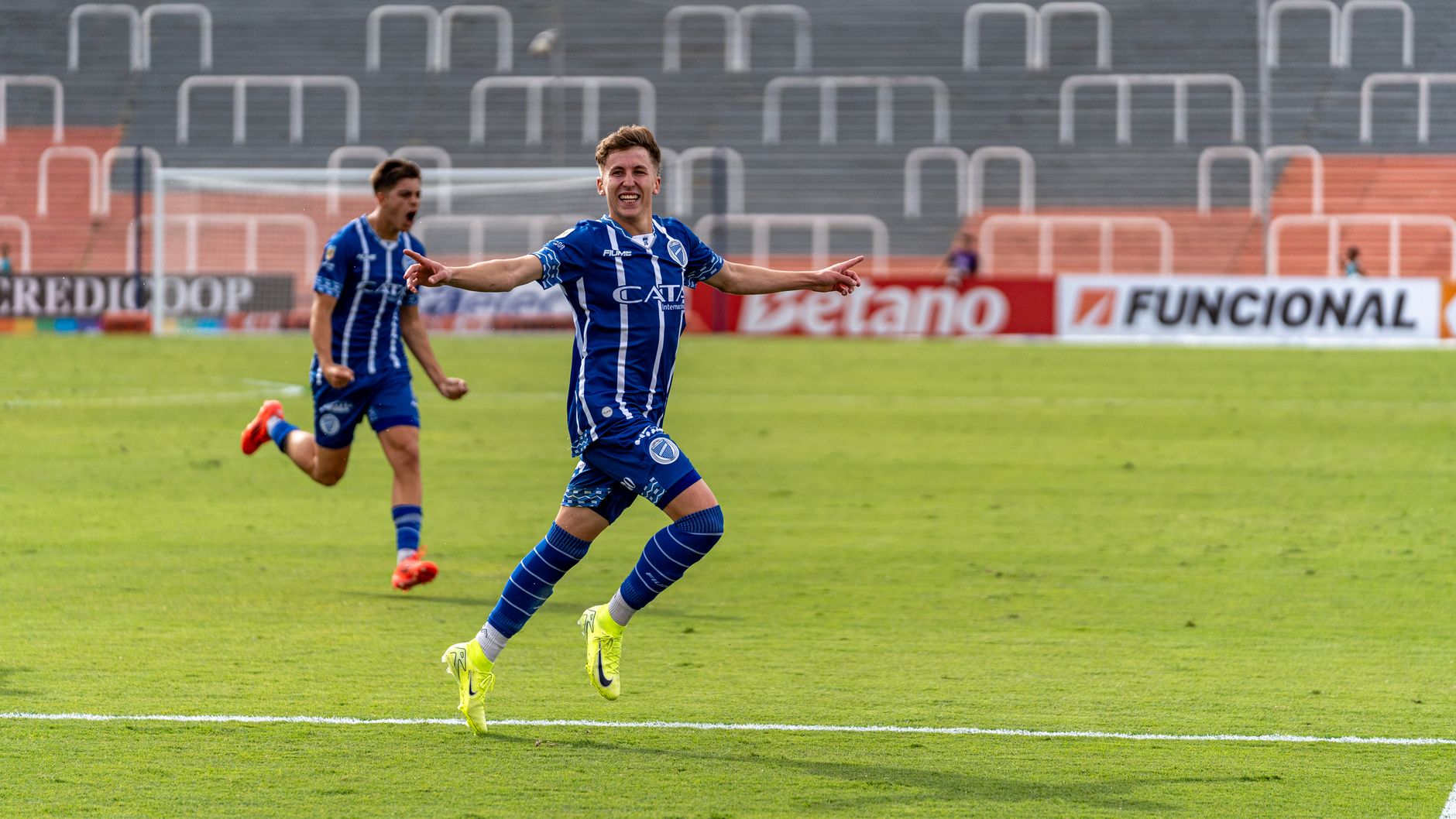
Photo by Franco Monsalvo on Pexels
Is Spain the Best-Value World Cup Football Contender?
Spain is the best-value contender among these three because its young technical core, positional discipline, and possession-based identity could improve rapidly before 2026, even though its limited knockout experience increases uncertainty.
Spain’s upside is easy to see when Lamine Yamal attacks from the right, Pedri receives between lines, and the midfield circulates the ball until an opponent’s defensive shape begins to crack. The Spanish model, associated with patient possession and coordinated pressing, can reduce the number of dangerous transitions conceded. That creates a useful analytical effect: Spain may not always dominate the scoreboard, but it can dominate territory, passing sequences, and the location of the next decisive action. Luis de la Fuente’s challenge is turning technical control into consistent penalty-area production.
Here is the contrarian point: Spain may be more dangerous in 2026 than its public reputation suggests, but it may also be overpraised when possession is mistaken for control. A team can record 65% possession and still create fewer high-quality chances if its circulation remains outside the penalty area. The information gain comes from separating possession efficiency from possession volume. Track progressive passes, shots from central zones, set-piece defense, and the rate at which Spain creates chances after recovering the ball. Those indicators are more revealing than possession percentage alone. For fans comparing Spain with France or Argentina, the reasonable conclusion is not “Spain will win,” but “Spain’s development curve may offer the clearest upside.”
See the latest tactical context and player-development notes before drawing a conclusion.
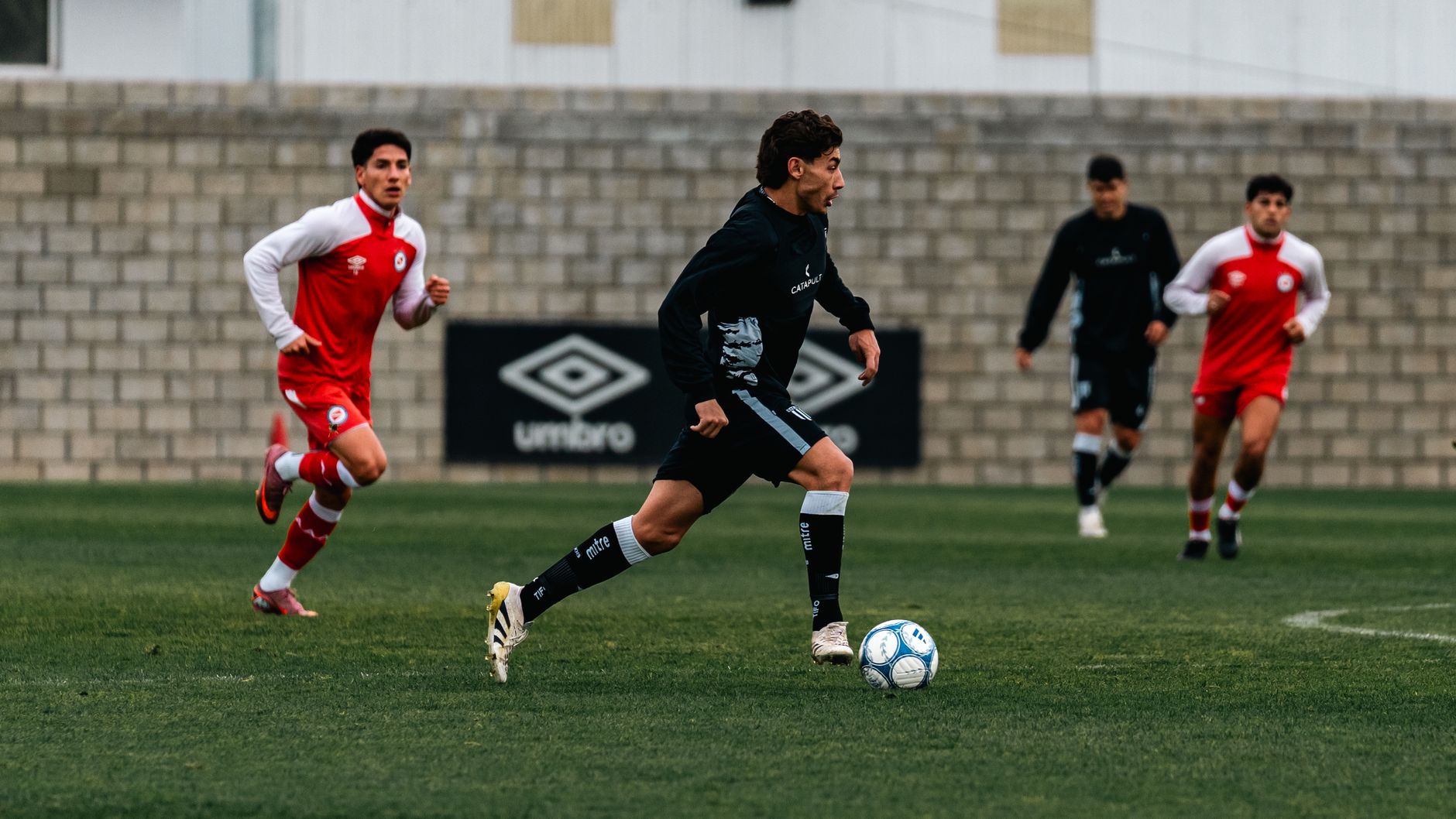
Photo by Franco Monsalvo on Pexels
How Did We Rank These World Cup Football Teams?
We ranked France, Argentina, and Spain using a weighted model that gives 30% to squad quality, 25% to tactical flexibility, 20% to recent international performance, 15% to depth and injury resilience, and 10% to tournament logistics and experience.
The model avoids one common error: treating every variable as equally important. A team’s star player matters, but the probability of a title depends on eleven starters, substitutes, coaching decisions, rest days, travel, climate, and opponent matchups. The 2026 World Cup will span three countries—Canada, Mexico, and the United States—so travel and environmental conditions may influence preparation more than they did in a single-host tournament. FIFA’s official 2026 World Cup information confirms the scale of the expanded event and its North American setting.
Our scoring process uses the following framework:
- Squad quality, 30%: Starting-level talent, positional balance, and elite match-winners.
- Tactical flexibility, 25%: Ability to attack low blocks, press, counter, and protect a lead.
- Recent performance, 20%: Competitive results weighted more heavily than friendlies.
- Depth, 15%: Quality of substitutes and resilience to injuries or suspensions.
- Tournament conditions, 10%: Travel, climate adaptation, schedule, and knockout experience.
The 2026 logistics category deserves more attention than it receives. A European-based team may face long flights between venues, while Mexico’s heat and altitude can create different physical demands from coastal American locations. The winning model therefore should be updated after the draw, because group placement changes travel paths and opponent difficulty. According to FIFA’s Laws of the Game resources, match decisions and competition procedures operate within standardized rules, but standardized rules do not eliminate human variance. Refereeing style, added time, penalties, and disciplinary accumulation can still shift a knockout match. Isn’t that exactly why the responsible approach is to use rankings as probabilities, not promises?
[Internal Link: responsible football prediction methods]
Which World Cup Football Team Should You Pick?
Pick France for the strongest all-around profile, Argentina for proven knockout resilience, and Spain for developmental upside; however, no team should be treated as a guaranteed winner or used as a reason to chase losses.
The right selection depends on what you mean by “best.” If you want the highest estimated title probability today, France is the logical answer. If you value demonstrated emotional control and late-stage tournament experience, Argentina is compelling. If you prefer a younger team with a rising performance curve and potentially better value than its reputation, Spain deserves serious attention. Brazil, England, Germany, and Portugal should remain in the wider contender group, because their tournament-winning probability is not zero simply because they sit outside this top three.
Before acting on any football prediction, compare at least three factors:
- Confirm the squad: Check injuries, suspensions, and final selection news.
- Review the schedule: Examine venue locations, travel distance, rest periods, and climate.
- Compare probability with price: A strong team can still be poor value if expectations are excessive.
- Set a fixed limit: Use only money you can afford to lose, and never increase stakes after disappointment.
- Reassess after the draw: Group opponents can change the practical route to the quarter-finals.
Football Insights focuses on FIFA World Cup previews, match predictions, tactical analysis, and player statistics, but analysis cannot remove uncertainty. The best decision is often the least emotional one: write down your estimated probability before looking at promotional language or social-media excitement. If your estimate changes, identify the new evidence. If you cannot name the evidence, your confidence may simply be moving with the crowd.
The final answer is France, followed by Argentina and Spain, but the deeper answer is more useful: World Cup football rewards flexible teams, healthy squads, and disciplined expectations. Check updated information after the 2026 draw, compare the tactical matchup rather than the badge alone, and treat every forecast as an estimate. Ready to follow the tournament with sharper context?
Frequently Asked Questions
Q: What is the FIFA World Cup?
A: The FIFA World Cup is the premier men’s international football tournament organized by FIFA. The 2026 edition will include 48 national teams and 104 matches hosted across Canada, Mexico, and the United States. Teams qualify through regional competitions before entering the group and knockout stages. The tournament winner must survive more matches than in the former 32-team format, making squad depth increasingly important.
Q: How can I compare World Cup football teams?
A: Compare squad quality, tactical flexibility, competitive form, depth, injuries, and the tournament schedule. Start with official squad announcements and recent competitive matches rather than relying only on FIFA rankings or friendly results. Then examine whether a team can attack deep defenses, defend transitions, and maintain performance during extra time. A simple weighted score can reduce emotional bias when comparing France, Argentina, Spain, Brazil, or England.
Q: Is France better than Argentina for the 2026 World Cup?
A: France currently has the stronger overall profile, while Argentina has the stronger recent championship record. France offers greater depth and multiple attacking solutions, whereas Argentina benefits from the cohesion and knockout experience established under Lionel Scaloni. The gap is not absolute, because injuries, the draw, and Lionel Messi’s role could materially change Argentina’s outlook. Recheck both squads after the official tournament draw and final preparation matches.
Q: What should I do if a World Cup prediction fails?
A: Stop and review the prediction instead of immediately increasing your stake. Record the original probability, the evidence used, and the event that changed the match, such as an early red card, injury, penalty, or tactical adjustment. A failed prediction does not automatically prove that the process was poor; a correct prediction does not automatically prove that the process was sound. Never chase losses, and use a fixed entertainment budget.
Q: How much does it cost to follow World Cup football analysis?
A: Basic tournament information and many Football Insights articles can be accessed without paying for match tickets or premium services. Costs vary for streaming subscriptions, travel, hospitality, and betting products by country and provider. Confirm local licensing, age requirements, and payment rules before using any gambling service. Treat predictions as informational content, not as a guaranteed source of income.
Q: What is the difference between World Cup odds and probability?
A: Probability estimates how likely an outcome is, while odds express a price that may include a bookmaker margin. For example, a 25% estimated chance corresponds to fair decimal odds of 4.00 before any margin or fees. A team can have the highest chance of winning but still offer poor value if the available price is too short. Converting odds into implied probability helps separate team strength from market pricing.
Q: Why can’t World Cup rankings guarantee the winner?
A: Rankings cannot guarantee a winner because football contains low-scoring variance, injuries, red cards, penalties, tactical mismatches, and small sample sizes. Even a team estimated at a 60% chance would fail to win in roughly 40 comparable scenarios out of 100. The 2026 tournament’s 48-team format, multiple host countries, travel demands, and expanded match schedule add further uncertainty. Use rankings to organize evidence, not to eliminate risk.
Football Insights � Editorial Archive � Volume IV