The Global Fan’s Guide to 2026 Football
The 2026 FIFA World Cup will feature 48 teams, 104 matches, and three host countries: Canada, Mexico, and the United States. Football Insights follows the tournament across 16 host cities, from Toront...

The Global Fan’s Guide to 2026 Football
The 2026 FIFA World Cup will feature 48 teams, 104 matches, and three host countries: Canada, Mexico, and the United States. Football Insights follows the tournament across 16 host cities, from Toronto and Vancouver to Mexico City, Los Angeles, New York/New Jersey, and Miami, combining match predictions, tactical analysis, player statistics, and daily World Cup coverage. The competition begins on June 11, 2026, and concludes with the final at MetLife Stadium in New Jersey on July 19. The expanded format creates more matches, more travel variables, and a larger probability gap between strong contenders and vulnerable qualifiers. Fans should track official fixtures, squad news, venue conditions, and team-level performance rather than relying only on reputation. For the clearest preparation, begin with the host-city schedule, then compare tactical matchups before considering any prediction or betting angle.

Photo by El gringo photo on Pexels
The Bottom Line
The 2026 World Cup is not simply a larger version of the previous tournament. It is a structural change to international football: 48 teams will be divided into 12 groups of four, with the top two teams in each group and the eight best third-place teams advancing to a 32-team knockout stage. That means the tournament will contain 104 matches rather than the 64 played in Qatar in 2022, and the competition will run for 39 days.
The hosts—Canada, Mexico, and the United States—qualify automatically, while the remaining 45 places are determined through FIFA’s regional qualification systems. According to the official FIFA World Cup 2026 overview, the event is designed as “the biggest World Cup ever,” and the numbers support that description. But bigger does not automatically mean better for every team. A broader field increases access for emerging nations, yet it also increases the chance of uneven group matches, fatigue, long-distance travel, and difficult logistical decisions.
For supporters, the practical conclusion is simple:
- Follow confirmed FIFA schedules instead of unofficial match lists.
- Separate team quality from tournament reputation.
- Check location, kickoff time, weather, and travel distance.
- Treat predictions as probability estimates, not guarantees.
- Use responsible limits if you choose to bet.
Football Insights covers these factors through match previews, tactical breakdowns, player form reports, and tournament updates. The question is not only who has the best squad. It is who can survive the route.
Want a clearer starting point for your World Cup preparation?
What Will Players and Fans Actually See?
The 2026 World Cup will spread matches across North America, creating a tournament environment unlike any previous edition. The 16 host cities are Atlanta, Boston, Dallas, Guadalajara, Houston, Kansas City, Los Angeles, Mexico City, Miami, Monterrey, New York/New Jersey, Philadelphia, San Francisco Bay Area, Seattle, Toronto, and Vancouver. The opening match will be played at Estadio Azteca in Mexico City, while the final is scheduled for MetLife Stadium in East Rutherford, New Jersey.
That geography matters because the distance between venues can change recovery patterns. A group-stage team could move from a humid coastal environment to a high-altitude city, then face a short turnaround before its next match. Mexico City sits at roughly 2,240 meters above sea level, while cities such as Miami and Houston present very different heat and humidity profiles. These details do not guarantee a result, but they affect the expected performance of pressing teams, older squads, and players returning from injury.
The FIFA World Cup 2026 host-city information should therefore be read alongside team news. A favorite may have superior technical quality but a less favorable travel sequence. A supposedly weaker side may gain value from continuity, local support, or a climate that suits its playing style. Isn’t that precisely where careful analysis beats casual reputation?
At Football Insights, the most useful match preview should connect four visible elements:
- The tactical matchup: pressing intensity, defensive block, transition speed, and set-piece strength.
- The player condition: minutes played, injury status, club workload, and international experience.
- The physical setting: altitude, temperature, humidity, pitch conditions, and travel.
- The tournament incentive: whether a team needs a win, can accept a draw, or is protecting goal difference.
A practical edge case is easy to miss: a 1-0 victory and a 4-0 victory produce the same three points, but the latter may matter substantially when third-place qualification is decided by goal difference. In a 12-group structure, late group matches may become calculation-heavy rather than purely tactical. Fans can also consult our [Internal Link: World Cup match prediction guide] for a framework that separates evidence from instinct.
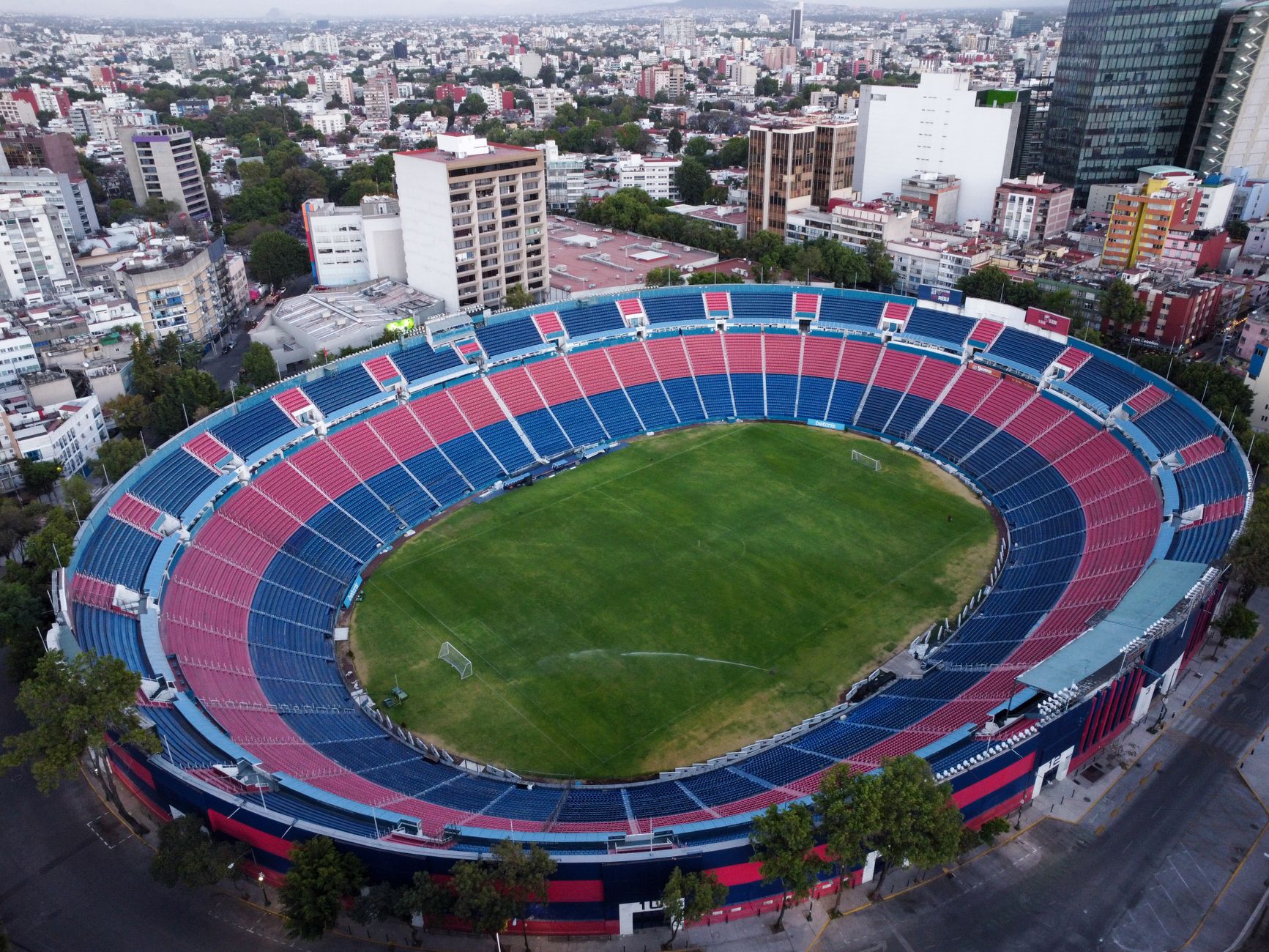
Photo by Antonio Ochoa on Pexels
What Are the 3 Things That Matter Most?
The three most important variables in World Cup 2026 football are squad availability, tactical compatibility, and tournament logistics. Rankings and historical reputation remain useful starting points, but they are weaker predictors when injuries, pressing styles, travel distances, and match incentives point in another direction. Strong analysis gives each factor a probability weight rather than treating one headline as decisive.
1. Squad depth beyond the starting eleven
A 26-player squad is valuable only when the replacements can preserve the team’s structure. One missing striker may reduce finishing quality, but the absence of a holding midfielder can disrupt buildup, counterpressing, and protection in front of the center-backs. This is why player statistics must be interpreted within a tactical system.
Consider two teams with similar possession numbers. One may create chances through a single elite creator, while the other generates opportunities through several runners and overlapping full-backs. If the first team loses its creator, its expected attacking output may fall sharply. If the second loses one player, its production may decline less because responsibility is distributed.
Football Insights evaluates:
- Recent club minutes and international starts.
- Progressive passes and ball recoveries.
- Shot-creating actions and final-third entries.
- Set-piece involvement.
- Defensive errors leading to shots.
- Substitution patterns and late-match effectiveness.
A useful probability habit is to avoid false precision. Saying a team has a 63% chance of winning is not a promise; it is a model estimate that can be wrong. The number becomes more trustworthy when its assumptions are visible.
2. Tactical compatibility
The best team on paper can be uncomfortable against a particular opponent. A high defensive line may dominate a slow buildup but struggle against direct runs behind the full-backs. A deep block may frustrate a possession-heavy favorite but concede repeated set pieces. The matchup can alter expected goals before the opening whistle.
For example, a team that presses aggressively needs synchronized distances between its front line and midfield. If one forward arrives late, the opponent may escape through the central channel. Conversely, a low-block side must defend second balls and crosses for long periods, which creates a different form of fatigue. These are not abstract coaching details; they often decide the final 20 minutes.
The FIFA Laws of the Game provide the governing framework, but tactical interpretation explains how teams exploit that framework. IFAB states that “the Laws are designed to promote fair and safe play,” yet competitive football is full of legal pressure: angled pressing, controlled physical contact, rest-defense positioning, and deliberate manipulation of space.
3. Logistics and recovery
The third factor is less glamorous and often more predictive than fans expect. Travel, time zones, heat, altitude, and rest days influence the probability that a team can reproduce its preferred intensity. A squad traveling thousands of miles between fixtures may not look exhausted during the opening half, but its pressing efficiency and sprint recovery can deteriorate later.
This is particularly important for teams dependent on repeated high-speed actions. A compact defensive side may conserve energy better than an aggressive pressing side, while a deep roster may handle substitutions more effectively. The same weather can also affect teams differently: humidity raises the physical cost of repeated runs, whereas altitude can influence the rhythm of teams accustomed to sea-level conditions.
Get the analytical framework before judging a favorite’s odds.
What Are the Edge Cases and Gotchas?
The most common World Cup 2026 mistakes involve incomplete schedules, misleading statistics, and overconfidence in familiar teams. FIFA’s expanded tournament format introduces more possible routes through the competition, while the North American setting adds practical complications. A responsible reader should ask what the headline leaves out: the opponent quality, sample size, venue, rest period, and squad availability.
One important edge case concerns third-place qualification. In a traditional 32-team group stage, the qualification path is relatively straightforward: finish first or second. In 2026, eight third-place teams will advance, which means a team could remain alive after a draw or narrow defeat. However, the exact value of a result may depend on performances in other groups, creating uncertainty until the final group matches are completed.
Another overlooked issue is the difference between raw possession and useful possession. A team can hold 62% of the ball while creating little danger if its circulation remains outside the penalty area. Meanwhile, an opponent with 38% possession may generate better chances through direct transitions. Football Insights therefore compares expected goals, field tilt, progressive actions, defensive pressure, and shot quality rather than using possession as a shortcut.
Watch for these specific traps:
- Ranking inertia: FIFA rankings summarize past results but do not automatically capture current injuries.
- Small samples: Two excellent matches can distort a player’s recent form.
- Friendly-match noise: International friendlies often involve substitutions and lower competitive urgency.
- Venue assumptions: A host nation may have home support, but not every match will be played near its strongest regional base.
- Betting-market overreaction: A late injury headline can move prices before confirmed tactical information is available.
- Narrative bias: A famous player attracts attention even when the opponent’s midfield matchup is the decisive factor.
There is also a responsible gambling concern. A prediction website can explain probabilities, but no model removes uncertainty. Before placing any wager, check local laws, use only licensed providers where applicable, set a fixed budget, and never chase a loss. The World Health Organization gambling information page describes gambling-related harm as a public-health issue, which is a useful reminder that entertainment should never become financial pressure.
A practitioner-level tip is to record the closing odds, not just the final score. Over 20 or 30 selections, this helps reveal whether your process is identifying value or merely remembering dramatic wins. If a prediction wins at poor odds, that does not automatically make it a good decision; expected value depends on the price paid and the estimated probability. Or am I wrong? The mathematics is uncomfortable, but that discomfort protects you.

Photo by AlphaTradeZone on Pexels
What Is the Verdict on World Cup 2026 Football?
World Cup 2026 football will reward teams that combine elite talent with adaptability. The tournament’s 48-team format, 104 matches, 16 host cities, and three-country footprint create more opportunities for surprise than a simple list of historical favorites suggests. Canada, Mexico, and the United States provide an enormous stage, but the eventual champion must still navigate squad depth, tactical matchups, travel, climate, pressure, and knockout-game variance.
For fans, the strongest approach is layered. Begin with verified FIFA information, then assess the team’s recent performances, tactical identity, injury list, and venue schedule. Finally, compare the implied probability of a prediction with your own evidence rather than following a popular narrative. A team with a 55% estimated chance may be a better selection than a team with a 70% chance if the available price does not reflect the difference—but only if the estimate is disciplined and the wager is legal and affordable.
Football Insights is built for that process, covering daily World Cup news, player statistics, team tactics, match predictions, and tournament developments. The goal is not to pretend uncertainty has disappeared. It is to make uncertainty visible, measurable, and easier to discuss. Check the schedule, inspect the matchup, protect your budget, and enjoy the football for what it is: a contest where probability matters, but never controls every moment.
Ready to follow the tournament with sharper context?
Frequently Asked Questions
Q: What is the 2026 FIFA World Cup format?
A: The 2026 FIFA World Cup will feature 48 teams divided into 12 groups of four, followed by a 32-team knockout stage. The top two teams from each group and the eight best third-place teams will advance. This creates 104 total matches, compared with 64 in the 2022 World Cup, and makes goal difference and final-group calculations especially important.
Q: When and where will World Cup 2026 football be played?
A: The tournament will run from June 11 to July 19, 2026, across Canada, Mexico, and the United States. Matches will be hosted in 16 cities, including Mexico City, Toronto, Vancouver, Los Angeles, Dallas, Miami, Seattle, and New York/New Jersey. The opening match is scheduled for Estadio Azteca, while the final is scheduled for MetLife Stadium in East Rutherford, New Jersey.
Q: How can I analyze a World Cup 2026 match?
A: Analyze team availability, tactical compatibility, recent performance, venue conditions, and travel before considering a prediction. Check injuries, expected lineups, rest days, pressing patterns, set pieces, and chance quality rather than relying only on FIFA rankings. Football Insights uses these categories to separate measurable evidence from reputation and emotional storytelling.
Q: What is the difference between possession and attacking control?
A: Possession measures how long a team controls the ball, while attacking control reflects how effectively it uses that possession to create dangerous situations. A team may have 60% possession but produce fewer high-quality chances than an opponent using rapid counterattacks. Compare expected goals, penalty-area entries, progressive passes, field tilt, and shot locations for a fuller picture.
Q: Is World Cup 2026 betting legal everywhere?
A: No, World Cup betting rules vary by country, state, province, and licensed market. Fans should confirm local law and use only authorized operators where wagering is permitted. Set a fixed budget, avoid chasing losses, and remember that a prediction model describes probability rather than guaranteeing an outcome.
Q: What should I do if a player is injured shortly before a match?
A: Reassess the team’s tactical structure after a late injury instead of simply replacing the player’s name. Determine whether the absence changes pressing, buildup, set-piece duties, defensive coverage, or substitution options. Wait for confirmed team news when possible, because early reports may omit the player’s actual role or overstate the severity of the issue.
Q: How does Football Insights cover the 2026 World Cup?
A: Football Insights provides FIFA World Cup-focused coverage through match predictions, team tactics, player statistics, and daily tournament analysis. Its content is designed to help fans understand why a matchup may develop in a particular way, including the impact of injuries, formations, venue conditions, and schedule pressure. Readers should still make independent decisions and apply responsible gambling limits.
Football Insights � Editorial Archive � Volume IV