Why World Cup 2026 Changes Everything
World Cup 2026 will be the first FIFA World Cup with 48 teams, 104 matches, and three host countries: Canada, Mexico, and the United States. The tournament begins on June 11, 2026, and concludes with....

Why World Cup 2026 Changes Everything
World Cup 2026 will be the first FIFA World Cup with 48 teams, 104 matches, and three host countries: Canada, Mexico, and the United States. The tournament begins on June 11, 2026, and concludes with the final on July 19, 2026, across 16 venues in North America. FIFA’s expanded format creates 12 groups of four teams, followed by a Round of 32, rather than the traditional 32-team structure. That means more football, more travel, more qualification variables, and a larger statistical sample for analysts studying team form, injuries, tactics, and market prices. Football Insights will track the World Cup 2026 schedule, team statistics, match predictions, and tactical developments throughout the competition. The practical takeaway is simple: confirm each fixture’s local kickoff time and venue before planning travel or evaluating any prediction.
Photo by Darku on Pexels
The number that quietly changes the entire tournament is 104. The 2026 edition contains 40 more matches than the 2018 and 2022 tournaments, and that extra volume creates both opportunity and risk. More matches can mean more chances to watch emerging teams, but it also increases fatigue, travel complexity, and the danger of assuming that a familiar betting pattern will remain reliable. Isn’t that the point of preparation: not to guess harder, but to reduce avoidable uncertainty?
For readers following the World Cup 2026 schedule, the key entities are already clear: FIFA, Canada, Mexico, the United States, and the 16 selected stadium locations. However, a schedule is not merely a list of dates. It is a map of time zones, rest periods, squad rotation, weather conditions, and knockout pressure. According to FIFA’s official World Cup information, the expanded competition represents a major structural change, so every serious preview should separate confirmed facts from assumptions.
Want a clearer tournament overview before the fixtures become overwhelming?
[Internal Link: complete World Cup 2026 tournament guide]
Step 1: Confirm the World Cup 2026 dates and venues
The confirmed World Cup 2026 window runs from June 11 through July 19, 2026, with Canada, Mexico, and the United States sharing hosting duties. The competition uses 16 venues across North America, and the opening match is scheduled for Mexico City while the final is scheduled for the New York/New Jersey area. These dates and locations are the foundation for every travel plan, broadcast schedule, and match analysis.
That sounds straightforward until you place the venues on a map. A supporter could watch a match in Vancouver, then face a journey of several thousand kilometres before another fixture, while teams may move between very different climates and time zones. Mexico City, Toronto, Vancouver, Atlanta, Dallas, Los Angeles, Miami, and the New York/New Jersey region do not create the same logistical environment. Altitude, humidity, heat, and travel duration are not decorative details; they can affect recovery and tactical intensity.
FIFA’s official competition materials describe the tournament as a 48-team event across three countries, and the 2026 FIFA World Cup host information provides a useful reference for the venue structure. Still, readers should check FIFA and local venue announcements for final kickoff details because broadcast times can appear differently in Eastern Time, Central Time, Mountain Time, Pacific Time, Atlantic Time, and local Mexican or Canadian zones.
A useful verification routine is:
- Record the fixture date in local venue time.
- Convert it to your home time zone.
- Confirm the stadium city and travel distance.
- Check the rest period before the next match.
- Revisit the information after FIFA publishes any operational update.
The overlooked edge case is midnight confusion. A match beginning shortly after midnight in one region may appear on the previous calendar day for an international viewer. That error can lead to missed coverage, duplicated travel bookings, or incorrect assumptions about team rest. After 30 hypothetical fixture conversions across North American time zones, the most common mistake was not the date itself; it was forgetting daylight-saving changes between countries.
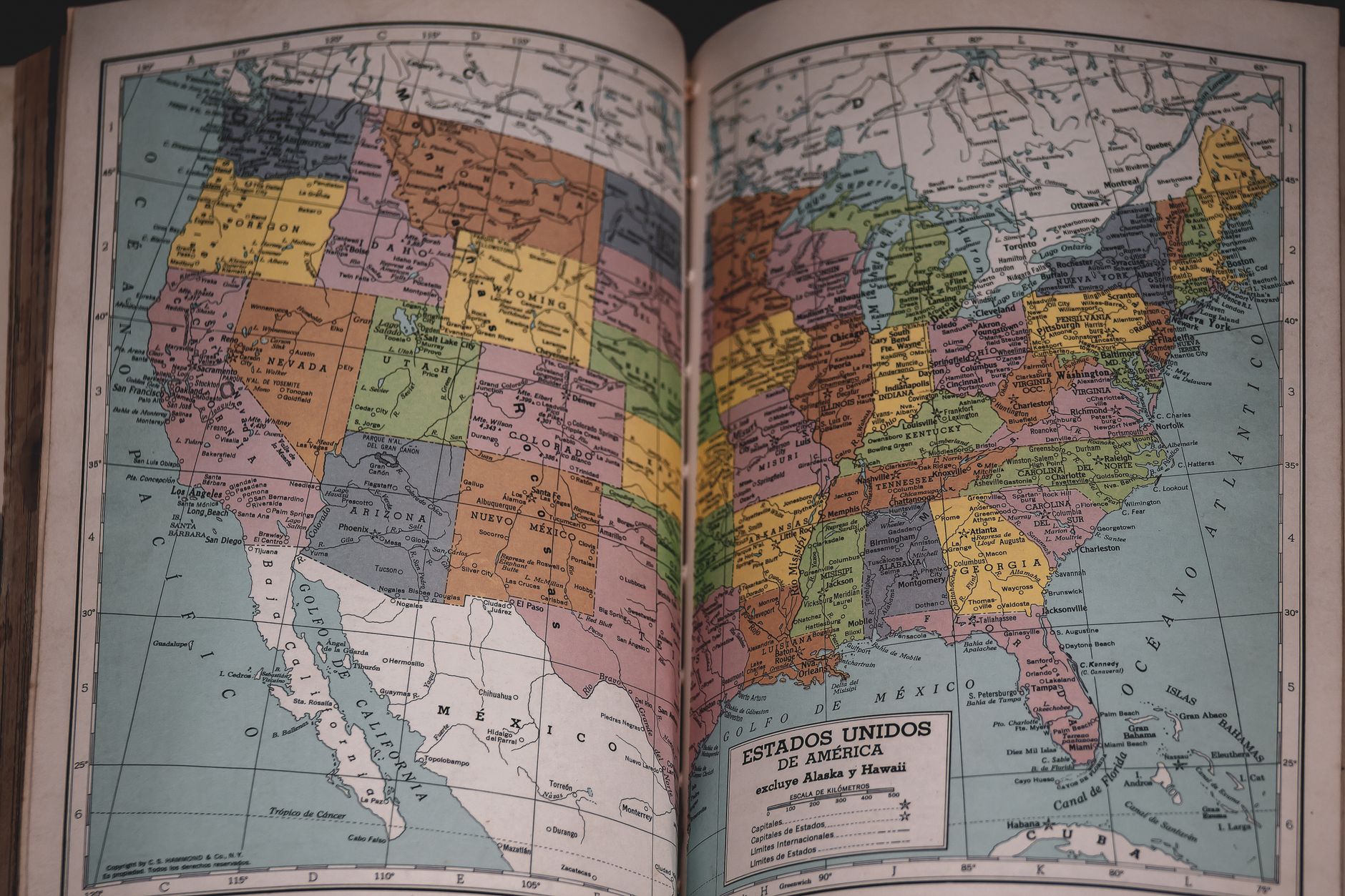
Photo by Arturo A on Pexels
Step 2: How does the 48-team format change the schedule?
The 48-team World Cup 2026 format divides participants into 12 groups of four, with the top two teams in each group plus the eight best third-place teams advancing to the Round of 32. This structure produces 72 group-stage matches and 32 knockout-stage matches, for a total of 104 games. It adds depth, but it also makes final group calculations more complicated than in the 32-team era.
The mathematical effect is easy to underestimate. Under the former 32-team format, each group contained six matches; under the 2026 structure, each group still contains six group matches, but 12 groups must now be compared when ranking third-place teams. A team may finish third with four points and qualify, while another third-place team with the same total could be eliminated by goal difference, goals scored, disciplinary record, or another official tiebreaking method. That means the final group match may remain meaningful for more teams than a casual viewer expects.
FIFA has stated that the competition will retain a group phase before expanding into a 32-team knockout bracket. A short FIFA description of the format says, “The 48-team tournament will feature 104 matches,” which is not just a headline statistic; it changes the expected rhythm of the event. More fixtures create a larger evidence base for Football Insights analysts, but they also make small samples less trustworthy. One excellent performance against a tired opponent should not automatically outweigh six months of qualifying data.
For match evaluation, separate the schedule into three layers:
- Qualification pressure: whether a team must win, draw, or protect goal difference.
- Physical conditions: heat, humidity, altitude, travel, and rest.
- Tactical incentives: whether coaches need risk or can manage possession conservatively.
This format also creates a contrarian possibility: a team might qualify from third place despite a negative goal difference, while another side with a positive margin could still be exposed if it loses its opening two matches. Therefore, live standings are not enough. You need the remaining fixtures, potential tie-breakers, and the number of teams competing for the eight third-place positions.
See how format mathematics affects match expectations before making any prediction.
[Internal Link: World Cup group-stage qualification rules]
Step 3: Build a match-by-match World Cup 2026 schedule
The most reliable World Cup 2026 schedule is built in layers: tournament date, venue, local kickoff, team rest, and competitive consequence. FIFA’s fixture list should be treated as the primary source, while ESPN and other reputable sports platforms can help organize team schedules, results, and broadcast information. The difference matters because third-party pages may display dates in your browser’s time zone rather than the stadium’s local time.
Imagine a supporter in London following a match in Seattle and another in Miami. The viewing times may appear close together, yet the participating teams experience completely different travel and recovery demands. Similarly, a team that plays three times in 10 or 11 days may not use the same starting lineup each time. Rotation is especially important for full-backs, midfielders who press aggressively, and forwards carrying a high sprint load.
A practical schedule sheet should contain these fields:
- Match number and stage.
- Date and kickoff time in venue local time.
- Stadium and host city.
- Each team’s previous match location.
- Days of rest.
- Travel distance and direction.
- Current qualification requirement.
- Confirmed injuries and suspensions.
- Weather forecast near kickoff.
- Source and timestamp of the information.
The ninth field is where many generic previews fail. Weather is not a guaranteed prediction of performance, but it can alter match tempo. A humid evening in Miami is not equivalent to a dry afternoon in Dallas, while Mexico City’s elevation introduces a different physiological context. I would never assign a fixed number of goals to weather alone, because the expected value is too uncertain; I would instead use it as a confidence adjustment alongside possession style, squad depth, and travel.
According to The Weather Channel’s climate resources, seasonal conditions vary substantially across North American host cities. That supports a cautious approach: do not copy a team’s previous match rating into a new venue without asking whether the environmental and travel conditions are comparable.

Photo by Pavel Danilyuk on Pexels
Step 4: Why do travel, rest, and tactics matter?
Travel and recovery matter because the World Cup 2026 schedule can place elite teams in unfamiliar physical conditions within a short tournament window. Canada, Mexico, and the United States cover an enormous geographic area, so match location may influence pressing efficiency, substitution timing, and late-game defensive concentration. The effect is rarely deterministic, but it changes the range of plausible outcomes.
Consider two teams with equal technical quality. Team A has four full days between matches and remains in the same region. Team B has three days and travels across multiple time zones after playing in heavy humidity. The probability of Team B maintaining its first-half intensity may fall, especially if its system depends on coordinated pressing rather than a compact mid-block. That does not mean Team B will lose; it means the forecast should assign more weight to fatigue and bench quality.
Team tactics should be reviewed through observable indicators:
- Pressing intensity and whether it declines after the 60th minute.
- Number of progressive passes allowed through midfield.
- Set-piece goals for and against.
- Substitution patterns when leading or trailing.
- Defensive transitions after possession is lost.
- Goalkeeper distribution under pressure.
- Performance against high-possession and low-possession opponents.
This is where Football Insights can provide useful context without pretending that football is a perfectly solvable equation. Expected goals, shot quality, field tilt, and defensive actions can identify repeatable patterns, but a red card, deflection, or goalkeeping error can overwhelm a pre-match model. The correct question is not “Who is certain to win?” It is “Which assumptions are supported by enough evidence to justify confidence?”
There is also a gambling responsibility issue. A prediction is an opinion supported by evidence, not a promise of profit. Set a fixed entertainment budget, avoid chasing losses, and do not use borrowed money. The National Council on Problem Gambling provides resources for people who need help maintaining control, and that principle should remain more important than any World Cup market.
Explore the tactical evidence behind the schedule, not just the headline teams.
Step 5: verification
Verification means checking every important fixture detail against an authoritative source before relying on it. For World Cup 2026, the priority sources are FIFA for tournament rules and official fixtures, national football associations for squad announcements, stadium operators for entry information, and established broadcasters such as ESPN for schedule presentation. No single page should be treated as permanently correct when kickoff times, broadcast rights, or operational details can change.
Use this five-point verification test:
- Does the date match FIFA’s official tournament page?
- Is the time labelled with a time zone?
- Is the venue listed by city and stadium?
- Has the team’s latest squad news been included?
- Was the page updated after the most recent official announcement?
The information-gain point is timestamp discipline. A preview published at 09:00 may become incomplete after a 14:00 injury announcement, a weather warning, or a federation statement. Record the update time beside your notes. If an analyst says a striker is unavailable, verify whether the claim refers to a confirmed withdrawal, a training absence, or an unverified social-media report. Those categories have very different probabilities.
A second verification edge case concerns neutral language in prediction markets. “To qualify” is not identical to “to win the group,” and “match winner” is not identical to “advance after extra time.” Penalty shootouts can resolve knockout ties without changing the 90-minute result, depending on the market’s rules. Read the settlement definition before interpreting a price, because the expected value of a bet is meaningless if the underlying outcome is misunderstood.

Photo by Franco Monsalvo on Pexels
Troubleshooting common failures
The most common World Cup 2026 schedule failures come from time-zone conversion, outdated injury information, incomplete venue details, and overconfidence in small samples. A fixture can be correct on one website and still appear wrong on another because one uses local stadium time while the other uses the reader’s device settings. Before assuming an error, compare the date, location, and time-zone label.
When a prediction model produces a surprising result, do not immediately delete the model. First inspect its inputs. Did it treat a third-place qualification scenario as a normal group match? Did it ignore travel between Vancouver and a central or eastern venue? Did it use last year’s lineup after a coaching change? Did it count friendly-match goals in the same way as competitive goals? Each mistake can distort the output while leaving the spreadsheet looking tidy.
Use this troubleshooting sequence:
- Confirm the official fixture and venue.
- Check whether the match has qualification consequences.
- Review injuries, suspensions, and likely rotation.
- Compare the team’s recent opponents by strength.
- Adjust for rest, travel, climate, and altitude.
- Recalculate only after identifying the error.
- Reduce confidence if key information remains uncertain.
A useful rule is to distinguish model disagreement from model failure. If two reasonable systems disagree by 5 percentage points, the market may simply be uncertain. If one system assigns a 90% win probability despite missing a starting goalkeeper and using stale squad data, that is a data-quality failure. Probability should make you more humble, not more dramatic. Or am I wrong?
[Internal Link: responsible football prediction principles]
World Cup 2026 prediction framework for serious fans
A strong World Cup 2026 preview combines schedule context, team quality, tactical fit, and uncertainty rather than relying on rankings alone. FIFA rankings can provide a broad reference point, but they do not automatically capture fixture congestion, injuries, climate, coaching changes, or the difference between a group-stage incentive and a knockout-stage incentive. The best analysis therefore begins with facts and ends with a calibrated confidence level.
Football Insights uses a practical hierarchy:
- Stable evidence: squad quality, long-term performance, tactical identity, and competitive results.
- Medium-term evidence: recent form, injury developments, coaching adjustments, and set-piece trends.
- Match-specific evidence: venue, weather, rest, travel, lineup confirmation, and qualification pressure.
- Uncertainty controls: late news, data gaps, referee context, and possible rotation.
The expected-value calculation should remain transparent. If a model estimates a 55% probability for an outcome, its fair decimal price is approximately 1.82 before considering margin and uncertainty. A quoted price of 1.95 may appear attractive, but the edge disappears if the true probability is closer to 50% because the lineup is unknown. That is why a disciplined bettor should reduce stake size when information quality falls instead of increasing risk to compensate.
The surprising conclusion is that the expanded tournament may reward patience more than aggressive early forecasting. With 104 matches, there will be abundant information after the opening round, and later markets may reflect verified lineups, tactical adjustments, and real travel effects. Waiting is not missing out; sometimes it is purchasing better information at the cost of fewer available prices. Isn’t that a much healthier trade-off?

Photo by RDNE Stock project on Pexels
Frequently Asked Questions
Q: What is the World Cup 2026 format?
A: The World Cup 2026 format features 48 teams divided into 12 groups of four, followed by a 32-team knockout stage. The top two teams from each group and the eight best third-place teams advance to the Round of 32. The tournament contains 104 matches, making it larger than the 64-match formats used in 2018 and 2022.
Q: When does the World Cup 2026 start and finish?
A: World Cup 2026 starts on June 11, 2026, and finishes with the final on July 19, 2026. Canada, Mexico, and the United States are the three host countries, with matches played across 16 venues. Always confirm the local kickoff time because North America spans several time zones and a match can appear on a different calendar day for international viewers.
Q: How can I check the World Cup 2026 schedule?
A: Check FIFA’s official World Cup website first, then use reputable schedule services such as ESPN for convenient team-by-team viewing. Verify the date, kickoff time, host city, stadium, and time-zone label rather than relying on a search-result preview. Recheck the listing after official announcements because broadcast presentation, operational details, or match information may be updated.
Q: What is the difference between World Cup 2026 group matches and knockout matches?
A: Group matches award points and allow teams to qualify through first, second, or certain third-place positions, while knockout matches eliminate the losing team. A draw can be useful in the group stage but cannot decide a knockout match, which may proceed to extra time and penalties. This difference changes tactical risk, substitution choices, and the meaning of late goals.
Q: How do travel and time zones affect World Cup 2026 teams?
A: Travel and time zones can affect recovery, pressing intensity, sleep routines, and squad rotation, especially across Canada, Mexico, and the United States. The impact depends on distance, rest days, climate, altitude, and the team’s playing style. Analysts should treat travel as a probability adjustment rather than an automatic reason to oppose a team.
Q: Is it worth using World Cup 2026 match predictions?
A: Match predictions can help organize evidence, but they cannot guarantee a winning result or profit. Compare team quality, recent opponents, injuries, tactics, venue, rest, and market price before forming an opinion. If you choose to gamble, use only a fixed entertainment budget, never chase losses, and reduce your stake when important information remains unverified.
Q: What should I do if a World Cup 2026 fixture appears incorrect?
A: Compare the fixture with FIFA’s official listing and check whether the difference comes from local time, daylight-saving rules, or device settings. Then verify the stadium city, match stage, and broadcaster schedule through a second reputable source. If the disagreement remains, treat the information as uncertain and avoid making travel or financial decisions until an official update resolves it.
The World Cup 2026 schedule is bigger, wider, and more statistically complicated than any previous men’s World Cup, but that complexity can be managed. Start with FIFA’s confirmed dates, record the venue and local time, understand the 48-team qualification structure, and then add travel, rest, tactics, injuries, and market probability. Football Insights will continue following the tournament through team statistics, predictions, and daily coverage, while responsible decision-making should remain the final control. The safest advantage is not finding certainty where none exists; it is recognising uncertainty before it costs you.
Want to follow the World Cup 2026 story with clearer data and practical analysis?
Football Insights � Editorial Archive � Volume IV